
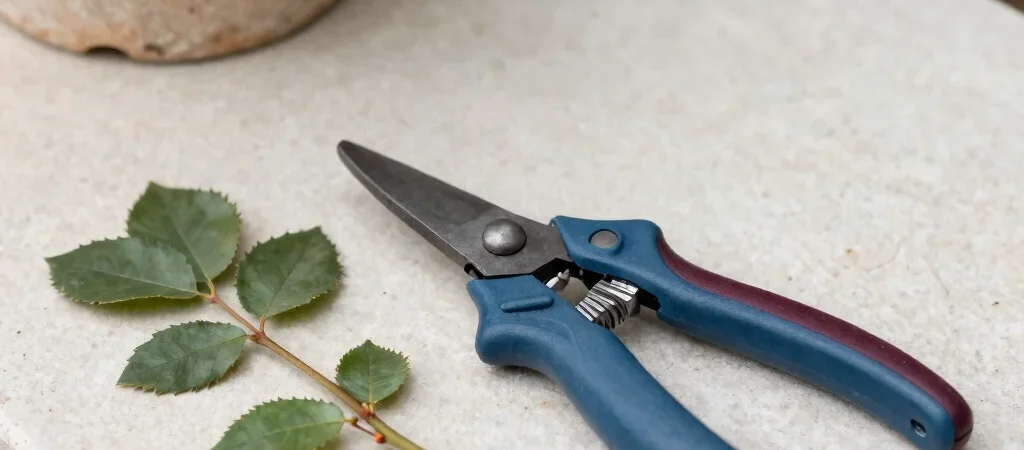
The right pair of pruning shears should make a clean cut without turning a quick task into a wrestling match. Before comparing handles or finishes, notice what you actually prune: living stems, dry growth, or a little of both. That small distinction is a better starting point than a long list of features.
Start With the Cut
Bypass shears have two blades that pass one another, a design generally suited to cutting living stems. Anvil shears bring a blade down onto a flat surface and are often used for dry or dead material. Neither style is a substitute for a lopper or pruning saw when a branch is beyond the tool’s stated capacity.
Let Your Hand Decide
A pair that feels comfortable in the shop may feel very different after a row of roses or a basket of tomato vines. Check that the handles open and close without straining your grip, and that the locking mechanism is easy to reach. If you have smaller hands or limited hand strength, look for a suitable handle size and try the action before committing.
Think about upkeep, too. Replaceable blades, a simple lock, and parts you can clean are useful considerations, but they matter only if they suit the way you garden. Read the manufacturer’s guidance for the tool’s cutting limit rather than asking a compact pair to handle branches it was not made for.
Keep Them Ready
After pruning, wipe away sap and moisture, then store the shears dry and closed. Follow the maker’s instructions for sharpening and oiling; a brief care ritual can help a well-chosen tool remain useful season after season. When we link to gardening tools, we may earn a commission, at no extra cost to you; our recommendations are based on fit for purpose, not a promise that one pair suits every garden.

